
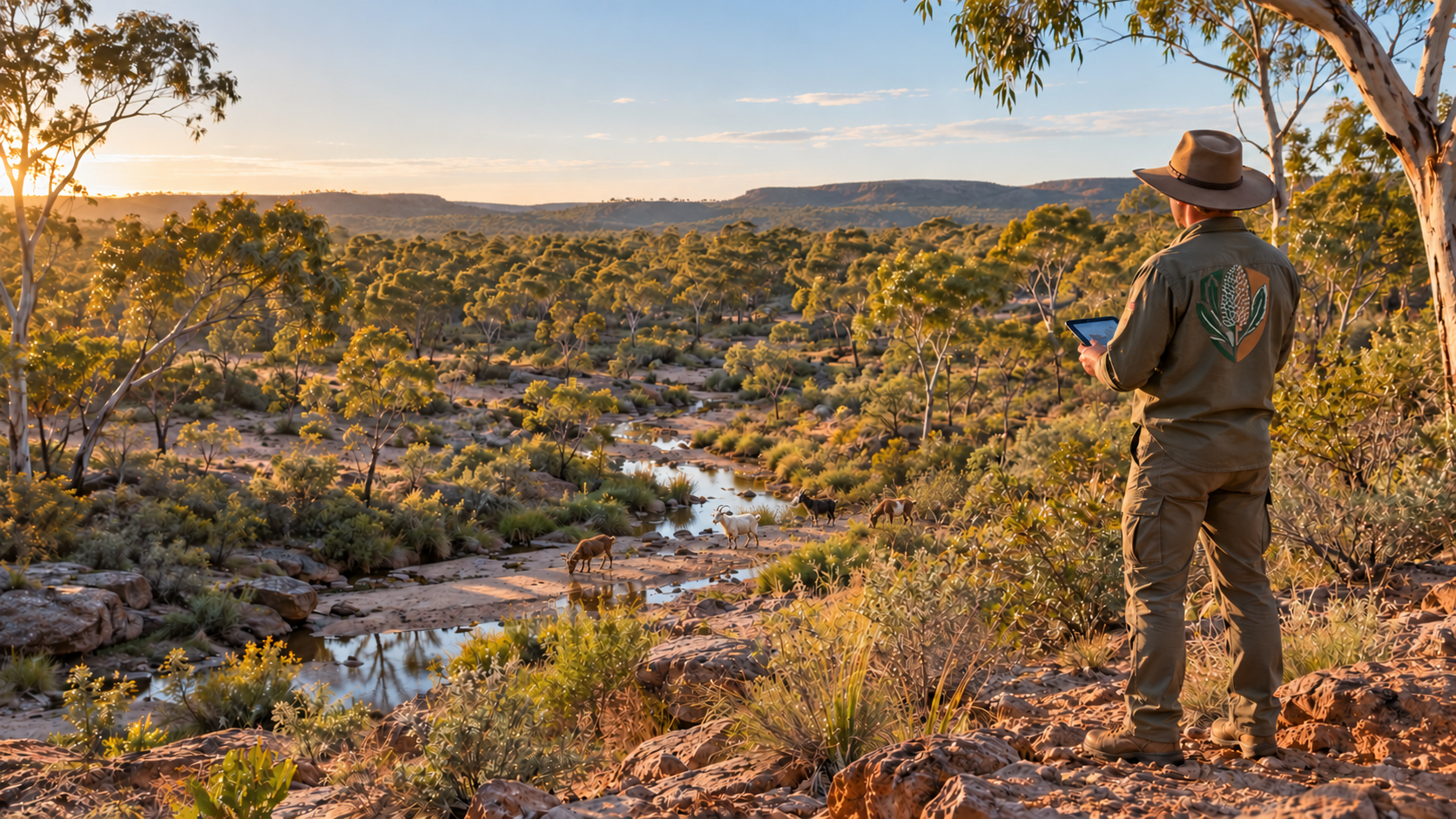
Completing an invasive species control operation is an important step. But for a landholder, conservation manager or government agency, a question remains: what has changed on the ground?
The number of animals removed records part of the work undertaken. Understanding the environmental outcome requires a broader view, one that considers continuing animal activity, the condition of affected areas and what subsequent observations reveal.
At Outback Advocate, our approach connects field intelligence, targeted management and follow-up reporting. The aim is to help clients understand both the work completed and the evidence available to guide their next decision.
Start With a Clear Baseline
Assessing progress begins before management work starts.
An initial field assessment provides a record of conditions at that point in time. Depending on the property and the agreed scope, this might include animal sightings, tracks, soil disturbance, browsing damage, water-point activity or areas of concern identified by the landholder.
GPS locations, dated photographs and field notes establish reference points that can be revisited.
A clear baseline helps answer two questions: what are we trying to improve, and how will we assess that improvement?
Return to the Areas That Matter
Follow-up monitoring should reflect the purpose of the management program.
If the concern is disturbance along a creek line, subsequent inspections would focus on that area. If the priority is browsing damage, repeat observations might examine the affected vegetation and signs of continued animal activity.
Useful follow-up records could include:
- Photographs taken from the same locations and viewpoints.
- Observations of fresh tracks, droppings or disturbance.
- Changes in damage at previously recorded sites.
- Sightings recorded with dates, locations and survey conditions.
- Feedback from landholders about activity between visits.
Consistency makes these records more useful. Recording where an assessment took place, how it was conducted and what conditions were encountered helps put the findings in context.
Interpret the Evidence Carefully
A quiet inspection does not, by itself, establish that a problem has been resolved.
Weather, visibility, survey timing and access can affect what is observed. Environmental recovery may also take longer to assess than changes in animal activity.
Good reporting should distinguish between what was observed, what those observations suggest and what remains uncertain.
For example, finding less fresh disturbance at monitored sites is a useful result. It should be reported alongside the survey coverage and conditions, with further monitoring recommended where needed.
Use Reporting to Guide the Next Step
A practical environmental report should do more than list activities.
It should explain the original concern, document the work undertaken, present follow-up evidence and identify any continuing issues. Maps and photographs can help clients see where attention is still required.
The next step might be another inspection, additional targeted management or continued monitoring over an agreed period. Recommendations should follow the evidence and the client’s priorities.
Keeping the Environmental Outcome in Focus
At Outback Advocate, we believe accountability extends beyond completing the field operation.
By connecting observations, on-ground action and follow-up reporting, we aim to give land managers a clearer understanding of progress—and a practical basis for deciding what comes next.
To discuss field assessments, invasive species management or environmental reporting for your property or project, contact: Outback Advocate.
Leave a Reply